
December 22nd, 2014 | 3 min read
Projection On Scrim
How to overcome challenges associated with scrim fabric
Here's a response to a customer inquiry that might also be of interest to many others:
Issue: "I am trying to front project on the scrim with a projector that conceals the set behind it with good light control. Please suggest a scrim for me and anything I should be aware of."
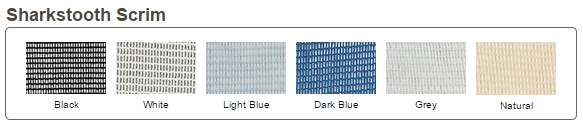
Response: Projection onto scrim can be a bit tricky but if you know some of the ins and outs you should be able to avoid the challenges associated with this effect.
All of our (scrim products) can be used for projection but typically theatrical projection is done on the old standby of white sharkstooth scrim. I have also seen projection done on elements of painted black scrim and scenic painted scrims. We have seen many desirable front projection effects and images produced on black scrim that has been sprayed (on the front) with rear-projection Screen Goo, as this makes a great reflective surface for the image on a black substrate. I personally do a lot of outdoor projection onto vinyl mesh like textilene or speaker mesh with great results. The scrim material chosen will depend on your application and the desired seamless area.
The effect of a scrim heavily depends on the control of stray light. It uses contrast to fool the eye into thinking that the material is opaque. Traditional theatrical scenic scrims are typically lit from a very steep angle so that the light that passes through the scrim falls just upstage or in the wings. As long as the space and objects behind it stay dark, you will not see anything through the scrim. If there is front light hitting the scrim straight on, or at a shallow angle, it will illuminate the area and objects behind the scrim. This is true for direct and reflected light from the stage.
When you apply this to projection, things will get a bit more complicated. The ideal setup will depend very heavily on a number of variables; the effect to be achieved, desired quality and purpose of the projection image itself, and the technical capabilities of the venue. All of this is assuming front projection on scrim since rear projection is not advisable and is typically done for effect only.
If your primary concern is projection image quality, you will likely want to put the projector in the house straight on to the scrim. This will produce the best quality of image but is the worst case scenario in terms of making a scrim appear opaque. This is typically how scrim projection is accomplished but it will likely require a blackout immediately upstage of the scrim. This blackout will catch all of the projector overshoot and certainly mask the scenery or stage behind it. Just before the reveal is made through the scrim, the blackout will be flown out or traveled open. If you are looking for a double image, the blackout may not be necessary at all as the background would be dimly lit the entire time.
If you are looking for less quality of image and more effect, the projector(s) can be placed at a sharp angle to the scrim and blended into one image similar to the way your stage lighting would be. This requires equipment capable of this type of image warping and will certainly reduce the overall quality of the projected content. This can be a technically complex setup and will require the appropriate projectors and image processing.
Recent Posts
One might think that a fabric company has little to do with lighting. After all, while scenery and lighting design are inexorably linked, how important can fabric be to either? Yet the choices a designer makes in fabric, as with all the other elements, will directly affect the final look of the production.
As high grade recording equipment becomes more affordable and non-linear editing software becomes more robust, even grade school children can now post high quality video content to YouTube on a regular basis.
You don't have to know every detail of your Stage Curtain to get a reliable budget estimate. This article covers the most important factors
Featured Posts
Scenic designers use Netting and Gauze fabrics in combination with other scenery and lighting to create visual illusions and spatial depth. The transparency of netting and the translucency of gauze make these fabrics particularly well suited for these effects. The following describes the characteristics of various nettings and gauzes and how you might use them to best effect.
Design, Specifications & Build Custom Services

We produce more stage & event curtains and backdrops than any other provider. Get a quote.

Email or call us at 800-223-1624 with a brief description of your project.

Use our Fabric Finder to easily search for any theatrical or event fabric