
Curtain Fullness
Curtains can be flat or have fullness. Curtain fullness refers to extra fabric, typically added via pleating, shirring, or gathering. The extra fabric is added across the width or sometimes height of the drape. Typically, draperies made with more fullness appear more luxurious, have improved acoustical characteristics, and are more opaque. The amount of fullness and the type of pleats or gathering will vary with the design style and the width of the fabric panels.
The use, look, and budget can help determine how much drapery fullness to add. Another consideration is whether seams need to be ‘hidden’ within the pleat. Taller draperies require more fullness to maintain the fullness at the bottom of the drape. For theatrical drapery, we usually mean "added fullness" when we discuss fullness. For example, we refer to a flat drape, such as a drop or cyclorama, as having 0% fullness. If your specifier is from the residential drapery world, they use total fullness, and would call a flat drape a 100% full drape.

See the visuals below for examples of how curtains look with different amounts of fullness and different ways of building fullness into a curtain.
You may also be interested in viewing:
How Much Fullness Should Be Built Into A Curtain?
The use, height, placement and budget for a curtain help determine the appropriate fullness for your curtain.
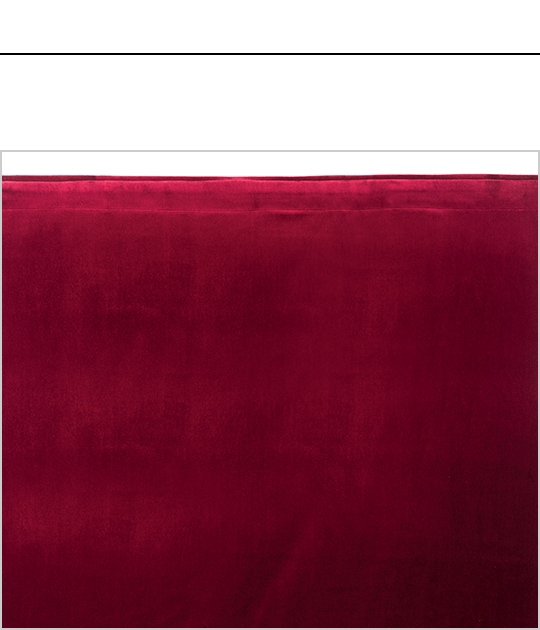
Flat or 0% Fullness
Curtains are sewn flat with a single or many widths of fabric seamed edge to edge. Some of the uses of flat curtains are drops, cycloramas (cycs) and maskings.
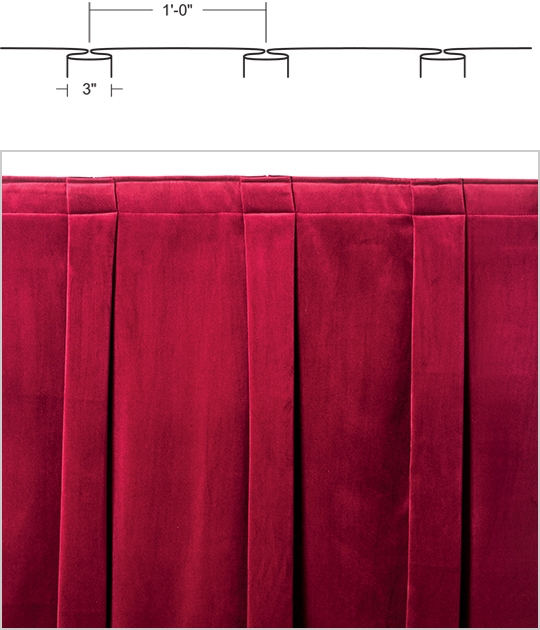
50% Box Pleats
A drape with 50% fullness uses 1.5 times more fabric than the finished width of the curtain.
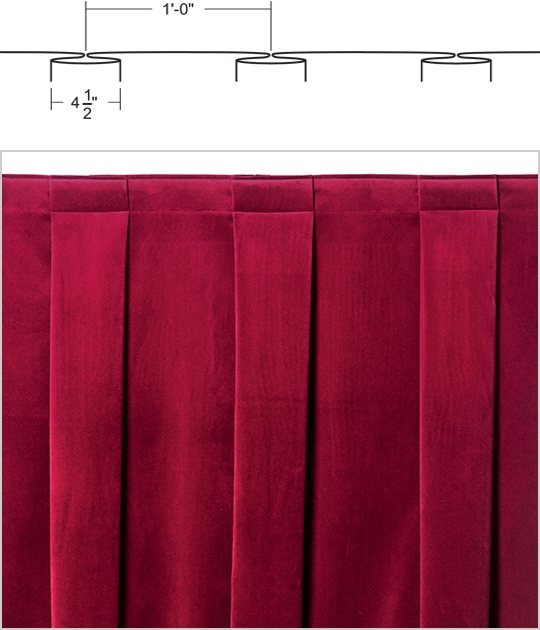
75% Box Pleats
A drape with 75% fullness uses 1.75 times more fabric than the finished width of the curtain.
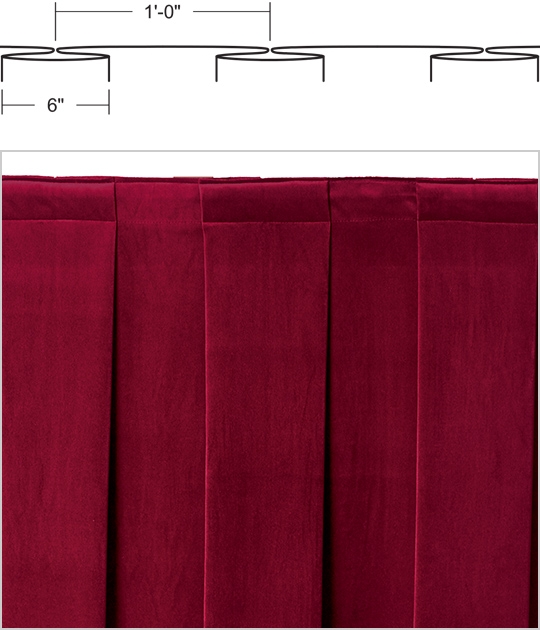
100% Box Pleats
A drape with 100% fullness uses 2 times as much fabric as the finished width of the curtain.
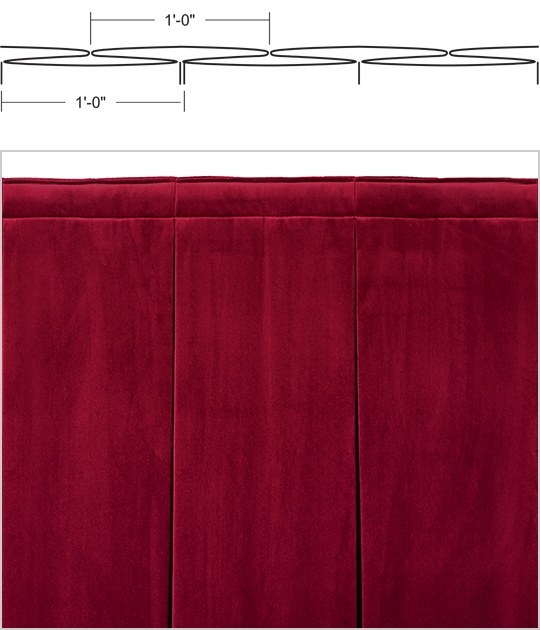
200% Box Pleats
A drape with 200% fullness uses 3 times as much fabric as the finished width of the curtain. It is most commonly used for Main Curtains where a rich, full look is desired.
What Are The Different Ways To Build Curtain Fullness?
While the examples above use box pleats, which is the most common curtain fullness method, there are several other methods and types of drapery pleats available.
Fullness can be manufactured into a drape using a variety of different kinds of pleats or shirring. It can also be “hung in” using ties or a pipe and grommet.
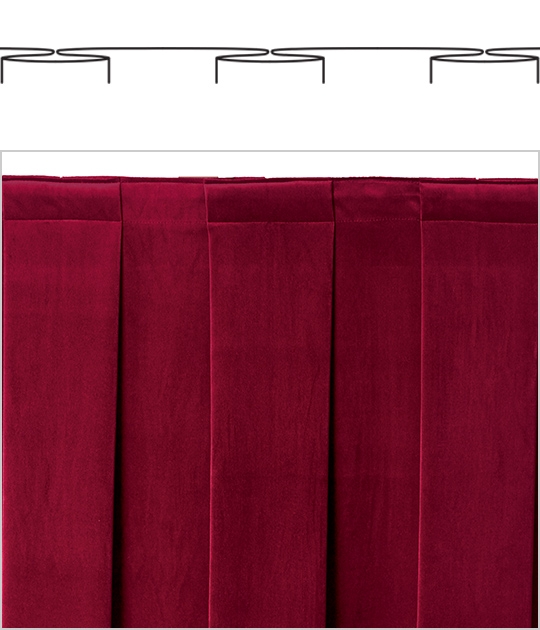
Box Pleats
Box pleats create a tailored look and are the most common way to add fullness to a drape. Attachment hardware is placed in the center of each pleat. Typically, drapes are pleated on 12” centers.
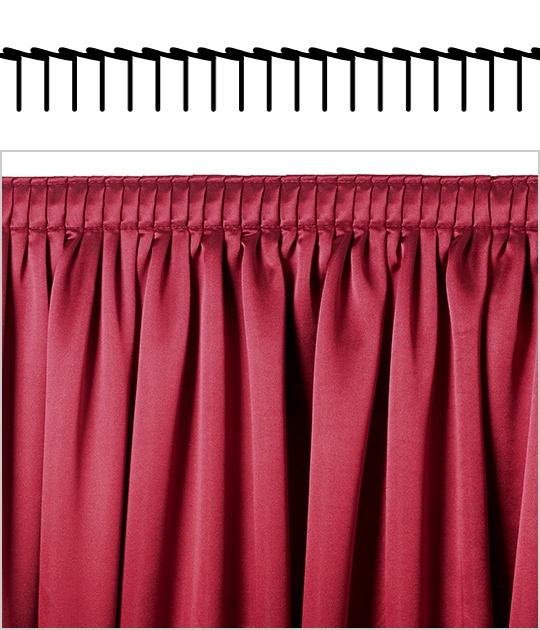
Shirring
Most successful in fabrications with 150% - 200% fullness. Used with light to medium weight fabrics or sheers. Shirring produces a soft, even fullness.
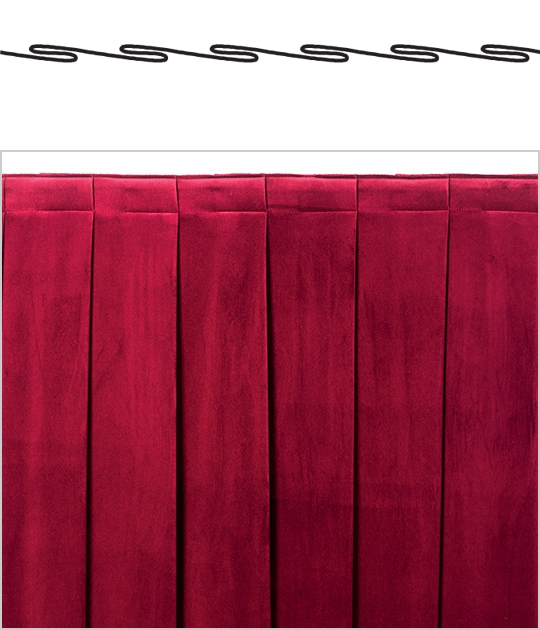
Knife Pleats
This treatment gives a less tailored look than a box pleat, yet a crisper look than shirring. Like shirring, it distributes the fullness evenly across the width of the drape.
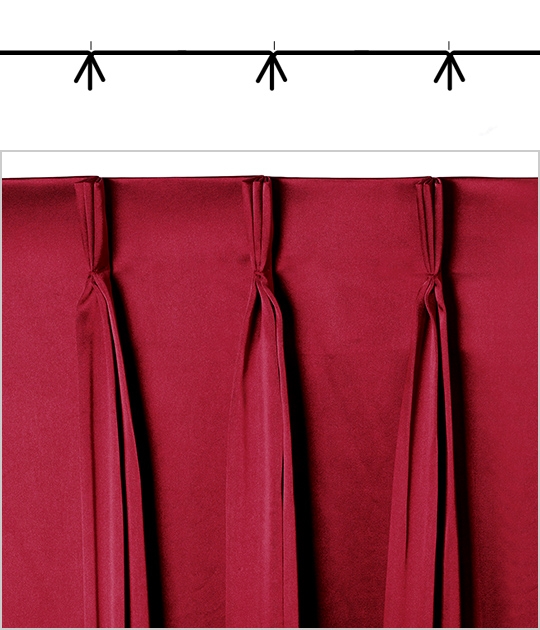
Pinch Pleats
Pinch pleats are the most decorative heading. They are often used in front of house locations or windows. They’re normally installed with drapery hooks.
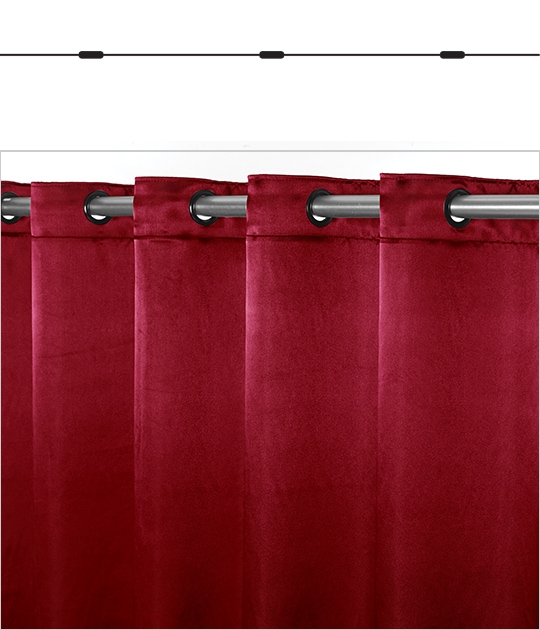
Pipe & Grommet
Large grommets are evenly spaced on a flat curtain that’s made wider than the opening it will cover. Fullness is then created as the drape is gathered when installed on a pipe.
How do I begin the process of ordering a custom curtain?
Ordering a custom curtain is a simple process with Rose Brand. Visit our Custom Sewing Quote Request form to get started. You don't need to know everything about your drape to submit a quote request. Make your best effort to fill out the request form. We'll call to guide you and ensure that the specifications that you indicated will meet your objectives.
If you still have questions about the various types of curtains and finishes, please refer to our Curtain Finishes & Lining Guide and Video Demonstrations of Curtain Types for more information. If you need help, contact our team of experts.